Google DeepMind creates AI that controls robots' entire bodies
Google DeepMind's new model allows robots to control arms and legs in an integrated way. Understand the leap in AI-guided robotics.
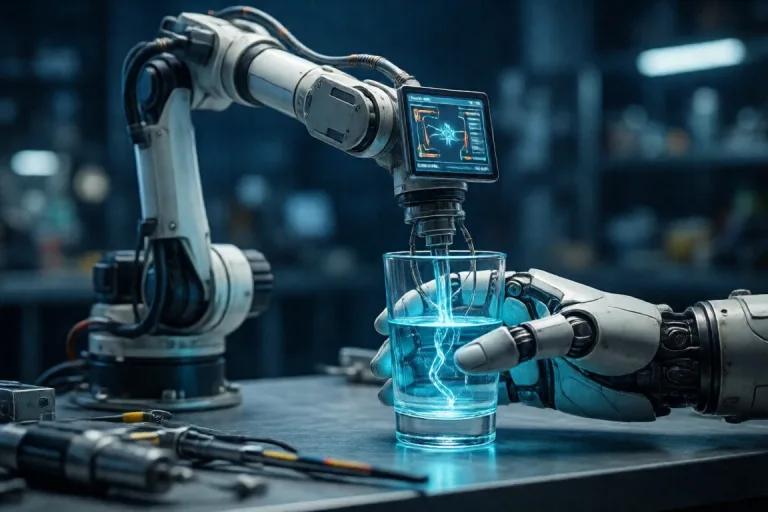
Illustration: FayAI Studio
Google DeepMind took an important step in robotics by launching an artificial intelligence model capable of controlling a robot's entire body in a unified way. Unlike old systems that divided commands between legs and arms, the new technology manages all movements simultaneously with fluidity.

This evolution is happening because multimodal AI models can now process vision, space, and physics in real time. Research is advancing rapidly to take robots out of controlled laboratory environments and put them into the real world, dealing with physical unforeseen events much more naturally.
For those learning AI in Brazil, this shows that artificial intelligence has moved beyond just digital texts and images. It's invading the physical world, changing how we interact with machines and transforming industry, logistics, and even future services.

In practice, imagine a home robot that can walk around your house, avoid obstacles, and pick up an object from the floor without losing its balance. This fine motor coordination was the biggest technical bottleneck, and AI has just solved a large part of that problem.
Keep an eye on how these integrated robotics technologies start to become cheaper and reach the commercial market. In the coming years, seeing assistant robots performing everyday tasks will no longer be exclusive to science fiction movies.
 Original story · image from the sourceRead it on The Verge ↗