Current AI wants to create the 'World Wide Web' of Artificial Intelligence
Meet the nonprofit project that aims to make AI accessible and free for everyone, creating a global interconnected network that works in an open and collaborative way.
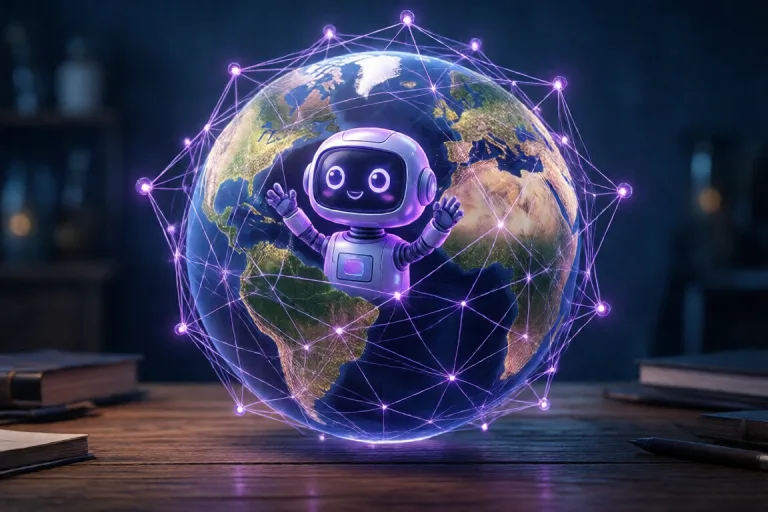
Illustration: FayAI Studio
The nonprofit organization Current AI announced an ambitious project to create what they call the 'World Wide Web of AI'. The idea is to build an open infrastructure where different artificial intelligence models can communicate and collaborate, without being trapped in the walled gardens of large corporations like Google or Microsoft. The goal is to ensure that AI technology remains a public good, accessible to developers and ordinary users for free and in a decentralized way.

Currently, the AI landscape is dominated by a few giant companies that control access to the most powerful models. Current AI's project emerges as a response to this centralization, inspired by how the original internet was created: through open protocols that anyone could use to build websites. They believe that if AI follows the path of becoming a closed and expensive service, global innovation will be limited and digital inequality between countries and people will increase drastically.
For Brazilians learning AI, this initiative is excellent news, as it can reduce dependence on dollar subscriptions to access cutting-edge technologies. Having an open 'AI web' means that students and small developers in Brazil could integrate AI capabilities into their projects without prohibitive costs. This encourages the creation of local solutions that solve problems specific to our reality, using models that better understand our culture and regional needs.
A practical example would be the creation of an educational system for Brazilian public schools. Instead of paying expensive individual licenses for each student to use a proprietary AI, developers could use Current AI's network to connect different free tools for translation, summarization and tutoring. This would allow building a robust and customized platform that works in an integrated way, taking the best of several open models to offer a rich and accessible learning experience.
Keep an eye on open source projects and nonprofit initiatives in the AI ecosystem. The advice is to start exploring open models, such as those available on Hugging Face, so you don't become dependent only on ChatGPT. Follow how Current AI will implement its connection protocols; understanding how different AIs 'talk' to each other will be a valuable technical skill. The future of AI could be much more collaborative and less corporate than it seems today.
 Original story · image from the sourceRead it on TechCrunch ↗